Titoli di Stato area Euro GRECIA Operativo titoli di stato - Cap. 3

Il ministro delle finanze irlandese: Il programma - ponte non è in grado di lavorare


Un programma - ponte sulla base di fatture versione probabilmente non funzionerà, l'unico modo per la Grecia è quello di estendere il programma in corso, ha osservato che viene all'Eurogruppo il ministro delle finanze irlandese, M. Noonan.

Egli ha aggiunto che sarà la prima occasione per ascoltare le posizioni del governo greco, così come riportato aver sentito cose diverse finora.

 
Assertivo Varoufakis: Noi non intendiamo lasciare la zona euro

2015/11/02 - 18:38

"La Grecia non lascerà l'euro"


Laconicamente andato alla riunione dell'Eurogruppo il ministro delle Finanze greco, C. Varoufakis.

In particolare, il ministro delle Finanze greco ha rifiutato di rilasciare dichiarazioni, nonostante il fuoco di fila di domande pervenute.

Escludi consigliata avversione giornalista sull'intenzione della Grecia verso la zona euro.
"La Grecia non lascerà l'euro" ha detto.

www.bankingnews.gr
 
Che prevalga la razionalità ed il buon senso.

Se prevale il buon senso e la razionalità prima o poi si arriverà ad un compromesso, altrimenti saranno guai per tutti; per la Grecia ma anche per l'UE.
Affinché prevalga il buon senso, valutando anche le implicazioni geopolitiche, è necessario:

1) prender atto che il memorandum è fallito e che il popolo greco è nella morsa della disperazione;

2) allentare l'assurdo vincolo del saldo primario, riducendolo in modo tale da permettere al governo greco di risolvere l'emergenza umanitaria;

3) prendere atto che il debito è insostenibile attuando una qualche forma di ristrutturazione che sia politicamente accettabile.


Al di là delle proposte del governo greco, l'eurogruppo non può esimersi dal rispondere efficacemente ai suddetti quesiti.
 
Ultima modifica:
Se prevale il buon senso e la razionalità prima o poi si arriverà ad un compromesso, altrimenti saranno guai per tutti; per la Grecia ma anche per l'UE.
Affinché prevalga il buon senso, valutando anche le implicazioni geopolitiche, è necessario:

1) prender atto che il memorandum è fallito e che il popolo greco è nella morsa della disperazione;

2) allentare l'assurdo vincolo del saldo primario, riducendolo in modo tale da permettere al governo greco di risolvere l'emergenza umanitaria;

3) prendere atto che il debito è insostenibile attuando una qualche forma di ristrutturazione che sia politicamente accettabile.


Al di là delle proposte del governo greco, l'eurogruppo non può esimersi dal rispondere efficacemente ai suddetti quesiti.


:up:

peccato però che abbondino i falchi, ed i pompieri sono veramente pochi: Moscovici in primis
 
FT: Quanto costerà un terzo salvataggio della Grecia?


Uno dei problemi a cui si fa alcun riferimento alla situazione di stallo attuale in Grecia è il fatto che Atene avrà bisogno terzo pacchetto di salvataggio, indipendentemente da ciò che accade a Bruxelles.

Secondo Peter Spiegel del Financial Times, sia Yanis Varoufakis e Alexis Tsipras hanno riconosciuto questo in incontri privati.

Il giornalista cerca di fare un calcolo approssimativo per la quantità necessaria, Atene, sulla base del più recente valutazione della Troika prima di quasi un anno. Come se fatto piani pienamente accettabili Mr. Varoufakis terzo piano di salvataggio raggiungerà 37,8 miliardi Euro.

Infatti, secondo Peter Spiegel è il migliore scenario possibile, in quanto richiede entrate fiscali sane e forte crescita economica prevista nell'ultima revisione.

***
Un pò eccessivo ...

����:Capital.gr – ÊåöÜëáéï óôçí ïéêïíïìéêÞ åíçìÝñùóç, ÏéêïíïìéêÝò åéäÞóåéò
 
Incontro finito con Lagarde - Dijsselbloem - Wieser


Con tre rappresentanti della Grecia partecipa alla straordinaria Eurogruppo ha iniziato il suo lavoro. L'incontro cui hanno partecipato i signori C. Dragasakis, C. Varoufakis e C. Chouliarakis.

Secondo fonti governative, è stato completato prima della riunione dei tre sopra citati signori C. Dijsselbloem T. Wieser, e Ch. Lagarde, l'incontro è stato una buona atmosfera e riguardava quello che potrebbe comportare un accordo-ponte.

Nel frattempo, secondo fonti del Maximos Mansion, non vi era alcuna richiesta di un incontro del primo ministro Alexis Tsipras con il cancelliere tedesco Angela Merkel ha detto fonti del governo e quindi aggiungere, non pianificato un tale incontro.

Per questa materia telefono era ministro di Stato con l'ambasciatore tedesco ad Atene.

Questa volta il primo ministro Alexis Tsipras visitare Rappresentanza permanente greca presso l'UE al fine di incontrare il personale e conoscere il lavoro della ACE. Domani mattina, il signor Tsipras incontrerà omologo belga Charles Michel.
 
Dalla newsletter di Dan Loeb:

In 2014, Greece’s economy started to improve modestly after a long malaise. This progress proved to be too little too late for Greece’s former Prime Minister, Antonio Samaras, whose New Democracy party was defeated in January elections which were triggered by the parliament’s failure to elect a President in December 2014. Samaras was committed to keeping Greece in the EU and had implemented unpopular but necessary fiscal and structural changes to pull the country back from the 2012 brink. Greek voters, who had suffered from austerity just long enough to miss out on its emerging benefits, rejected his approach and elected Syriza, a popular but inexperienced leftist party. Syriza’s first move was to form a coalition with a radical right wing party with whom they shared one key interest: aggressively confronting the Troika. The markets naturally reacted with grave concern.

Today, the situation is changing daily as Syriza finds its footing and faces divisions within its ranks. As we have seen many times before, campaigning and actually governing are two completely separate things and unfortunately, in this case, there is no time to learn on the job. The government is currently dealing with a plunge in asset values and tight liquidity for both the sovereign and banks. Tax collections – a significant, if unpopular, focus of the former PM – slowed significantly in the past few months, putting fiscal pressure on the government. Over the last few weeks, Greek banks have needed to borrow emergency ECB funding at high costs in order to meet deposit outflows. We believe that unless an agreement with creditors is reached this month, Greece will begin experiencing extreme liquidity pressures in early March. These liquidity pressures will only escalate leading into April as government treasury bill obligations and interest payments/maturities to private creditors and the IMF begin to pile up. Greece theoretically has enough liquidity to make it through February and possibly March (absent a bank run) but as we have witnessed time and again, the path to insolvency starts slowly but ends very quickly.

Thus far, Syriza has appeared unwilling to adjust its negotiating strategy to these liquidity constraints, instead choosing to remain firm on campaign pledges not to extend the current Troika program. This will soon create a “between a rock and a hard place” moment since Greek voters did not mandate Syriza to take Greece out of the Euro or default on its debts. The country’s only liquidity source is its EU partners, who will insist on continued monitoring and reforms as a funding condition. Syriza is far from omnipotent – it does not have a majority in parliament and its coalition is viewed as relatively weak given that its partner finished sixth in the elections, with less than 5% of votes, meaning only about 40% of voters voted for this government. A potential outcome of failed negotiations is a collapse of the existing coalition and possibly new elections, which would create significant market volatility but most likely produce a national unity government with a clear mandate to prevent catastrophe.

Despite this chaos, on the other side of the table, no one wants a Greek exit (“Grexit”) from the European Union. We are confident that Germany believes funding Greece and reducing its debt through a politically palatable restructuring is a good investment of German taxpayer funds. In 2014, Germany is poised to break the world record for largest current account surplus (again) at a whopping ~$285 billion, nearly double that of China and triple that of Saudi Arabia. Germany also boasts Europe’s lowest unemployment rate at 4.9%, which is half the Eurozone average and one fifth that of Greece. Both Germany’s current account surplus and low unemployment are enabled only by an artificially low currency which would be threatened with extinction should any Eurozone member opt – or be forced – to leave. As one German politician recently said, “Have you seen what happened to Switzerland?”

These are powerful incentives to drive a constructive German negotiating position, but the German government will not be blackmailed or embarrassed. Greece and Europe should almost certainly find common ground if Syriza can provide real alternatives to Greece’s existing austerity measures while respecting Germany’s need for a politically acceptable outcome. What a Syriza-led government ultimately means to Greece’s economic prospects remains unclear but one thing is certain: if they do not play their cards well in the coming weeks, it’s likely we will never know.
 
Assertivo Varoufakis: Noi non intendiamo lasciare la zona euro

2015/11/02 - 18:38

"La Grecia non lascerà l'euro"


Laconicamente andato alla riunione dell'Eurogruppo il ministro delle Finanze greco, C. Varoufakis.

In particolare, il ministro delle Finanze greco ha rifiutato di rilasciare dichiarazioni, nonostante il fuoco di fila di domande pervenute.

Escludi consigliata avversione giornalista sull'intenzione della Grecia verso la zona euro.
"La Grecia non lascerà l'euro" ha detto.

www.bankingnews.gr

Sta a vedere che a furia di smentite poi non succede veramente... Non voglio nemmeno pensare ad un grexit...
 
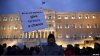
Many thousands in Syntagma

The mood in Syntagma -upbeat, optimistic, supportive of their government
 

Allegati

  • B9lDjKBIcAARejZ.jpg
    B9lDjKBIcAARejZ.jpg
    83 KB · Visite: 482
  • B9lBARmIEAA-55w.jpg
    B9lBARmIEAA-55w.jpg
    65,5 KB · Visite: 485
Stunning Rallies Are Happening in Greece Today

Here's one thing that might make a compromise deal for Greece difficult: The hardline negotiating stance taken by Alexis Tsipras is looking very, very popular in Greece.

In recent years, we've become used to seeing protesters in Greece (and elsewhere in Europe) rally against the government.

But now we're seeing large-scale protests in Greece -- as many as 15,000 in Athens alone -- from people in favor of the government fighting back against the demands of outside creditors. (Bloomberg)
 

Allegati

  • B9lZCvVCcAA7eYd.jpg
    B9lZCvVCcAA7eYd.jpg
    28,1 KB · Visite: 440

Users who are viewing this thread

Back
Alto